Category: Uncategorized
-
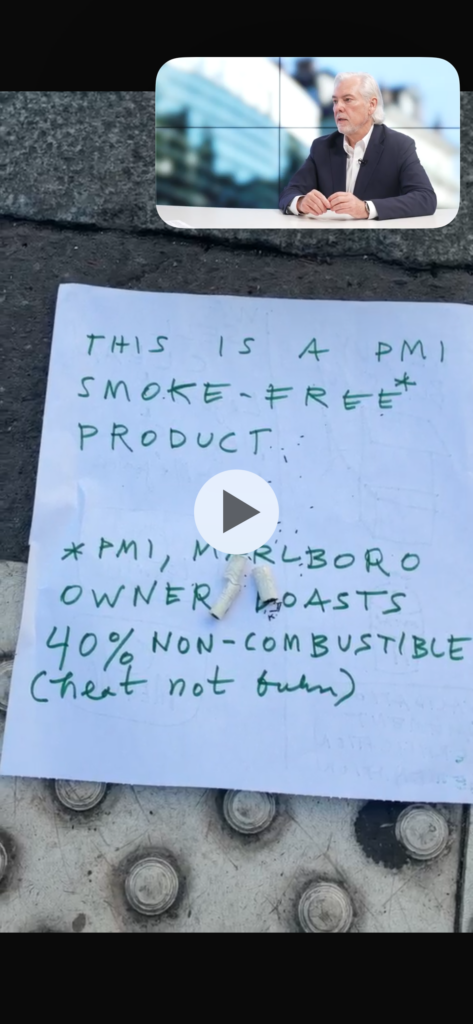
Mégot Lotto®️: “PMI Launches “Our World Is Not an Ashtray” Initiative”
New study reveals that one quarter of adult smokers think throwing cigarette butts on the ground is “normal,” confirming cleanup partner Litterati’s belief that education is key
LAUSANNE, Switzerland–(BUSINESS WIRE)–Philip Morris International Inc. (PMI) (NYSE:PM) today launched “Our World Is Not an Ashtray,” a new global initiative to raise awareness and drive a long-term change in behavior and attitudes around cigarette butt littering. The initiative supports PMI’s litter reduction target—described in its Integrated Report 2019—to achieve a 50 percent reduction of the plastic litter from its products by 2025 (vs. 2021 baseline). The initiative, launched on WorldNoAshtray.com, aims to educate the public about the environmental impact of cigarette butt littering and inspire adult smokers to change littering habits.
“We seek to make cigarette butt littering socially unacceptable,” said Huub Savelkouls, Chief Sustainability Officer at PMI. “‘Our World Is Not an Ashtray’ is an important initiative in our multipronged approach to addressing this important issue.”
To track progress against its goal, PMI is working with three organizations—Litterati, Cortexia, and CARTO—to implement a data-driven approach and assess the prevalence of cigarette butt litter across the globe; identify litter hotspots; and, monitor the impact of anti-littering activities. A pilot assessment will take place this summer in a pilot city before being rolled out in representative countries across the world in 2021 as part of a five year assessment.
Waste littering is a major environmental concern and was identified as an issue of growing importance for PMI following external assessments, and raised to priority status in its Sustainability Materiality Report at the end of 2019. In a new international study conducted by global research data and insights company Kantar this spring on behalf of PMI, 25 percent of adult smokers reported that they throw cigarette butts on the ground because they “think it is a normal way to dispose of a cigarette.”
The survey also revealed that 75 percent of respondents thought that cigarette filters are made of cotton or paper, and only 13 percent knew that filters are made of plastic. These findings highlight the need for awareness campaigns such as “Our World Is Not an Ashtray” to help change smokers’ behaviors.
Jeff Kirschner, Founder and CEO of Litterati, said: “There’s a widespread view that there’s nothing wrong with stubbing out cigarettes on streets or beaches, yet very few people realize that plastic is the main component in cigarette butts. Litterati began with just one person picking up a cigarette butt, and it has transformed into a global movement that’s empowering people to crowdsource-clean the planet. Together with PMI, we will use our technology to gather behavioral insight on cigarette butt littering, map problem areas, and mitigate future risk. We’re proud to be part of ‘Our World Is Not an Ashtray’ to help address cigarette butt litter worldwide.”
PMI is increasing the scale and reach of its participation in clean-up activities, to raise awareness of the issues of littering—and cigarette butt littering particularly—in local communities. Working with Litterati, PMI will encourage volunteers in every corner of the world to use the organization’s app to geotag litter and join cleanup challenges ranging from local neighborhoods to global initiatives. PMI’s affiliates will also work with local anti-littering organizations, following the participation of over 3,900 PMI volunteers from 31 countries in litter collections on World Cleanup Day 2019 where they collected 83 tons of litter.
Jens Rupp, PMI’s Head of Environmental Sustainability, said: “Cigarette butt litter is a problem that we need to solve; too many cigarette butts are littered, ending up in the natural environment. By working with experts to better understand how to nudge smokers to more responsible disposal habits, launching general population education programs, and cooperating with governments and local authorities to ensure there is an adequate waste disposal infrastructure, we can reduce the plastic litter associated with our products.”
For more on the “Our World Is Not an Ashtray” initiative, visit www.worldnoashtray.com.
-
Mégot Lotto®️: For info : MICA.
European crypto-assets regulation (MiCA)
SUMMARY OF:
Regulation (EU) 2023/1114 on markets in crypto-assets
WHAT IS THE AIM OF THE REGULATION?
Regulation (EU) 2023/1114 establishes uniform rules for issuers of crypto-assets that have so far not been regulated by other European Union (EU) financial services acts and for providers of services in relation to such crypto-assets (crypto-asset service providers).
The rules cover:
- transparency and disclosure requirements for the issuing, the offering to the public and the admission of crypto-assets to a trading platform;
- the authorisation and supervision of crypto-asset service providers and issuers of asset-referenced and electronic money (e-money) tokens;
- the operation, organisation and governance of the issuers and crypto-asset service providers;
- protection for holders of crypto-assets and clients of service providers;
- measures to prevent insider dealing, unlawful disclosure of inside information and market manipulation.
KEY POINTS
The regulation applies to the issuing, the offering to the public and the admission to trading of crypto-assets, and to the provision of services in relation to crypto-assets.
It distinguishes the following types of crypto-assets:
- e-money tokens (crypto-assets that stabilise their value in relation to a single official currency);
- asset-referenced tokens (crypto-assets that stabilise their value in relation to other assets or a basket of assets);
- crypto-assets other than asset-referenced tokens or e-money tokens.
Offerors1 or persons seeking admission to trading of crypto-assets other than asset-referenced tokens and e-money tokens must:
- be a legal person2;
- publish a crypto-asset White Paper and any marketing communication on their website;
- act honestly, fairly and professionally;
- communicate with actual and potential asset holders in a fair, clear and non-misleading manner;
- identify, prevent, manage and disclose any conflicts of interest;
- be liable for damages for incorrect information in the White Paper;
- provide holders of crypto-assets with a right of withdrawal.
Issuers of asset-referenced tokens that offer them to the public or seek their admission to trading on a trading platform for crypto-assets must:
- be a legal person or a certain undertaking based in the EU;
- have authorisation from their home EU Member State; or
- be a credit institution that produces a crypto-asset White Paper that is approved by the competent national authority;
- redeem their asset-referenced tokens at any time upon request of the holders at market value of the referenced assets or by delivering the referenced assets;
- publish a crypto-asset White Paper and any marketing communication on their website and be liable for damages for incorrect information in the White Paper;
- act honestly, fairly and professionally;
- communicate with actual and potential holders of the tokens in a fair, clear and non-misleading manner;
- act in the best interests of the holders of the tokens and treat them equally;
- establish and maintain effective and transparent procedures for handling complaints promptly, fairly and consistently;
- identify, prevent, manage and disclose any conflicts of interest;
- maintain at all times a reserve of assets covering the liabilities towards the holders of the tokens, and have own funds at least equal to the highest of the following:
- €350,000,
- 2% of the average amount of the reserve assets,
- a quarter of the fixed overheads of the preceding year;
- establish recovery and redemption plans for use if they are unable to meet their obligations.
Issuers of e-money tokens that offer them to the public or seek their admission to trading on a trading platform for crypto-assets must:
- be authorised as a credit or e-moneyinstitution;
- publish a crypto-asset White Paper and any marketing communication on their website and be liable for damages for incorrect information in the White Paper;
- comply with issuance, redeemability and marketing rules;
- issue the tokens at par value on receipt of funds;
- redeem, upon a holder’s request, the tokens at any moment and at par value;
- invest the funds they receive in secure, low-risk assets in the same currency and deposit them in a separate account in a credit institution;
- establish recovery and redemption plans for use if they are unable to meet their obligations.